Jose Mier, Sun Valley chef, returns to China (figuratively) for a new website with a new recipe for sweet and sour pork. This one’s the “original” Cantonese version.
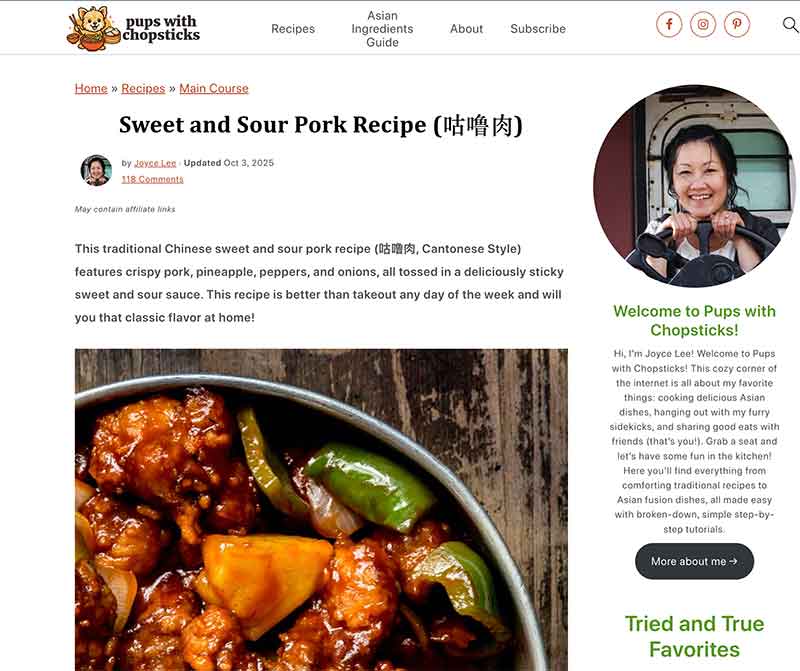
Sweet and sour pork is one of the most globally recognized Chinese dishes, yet few foods demonstrate cultural adaptation as clearly as this one. Originating in southern China—particularly in Guangdong and later flourishing in Hong Kong—the dish known as 咕嚕肉 (gū lōu yuhk, or “goo lo yuk”) evolved into a very different version once it reached the United States. While both the Cantonese/Hong Kong and American styles share the same core idea—crispy pork coated in a sweet-tangy sauce—their differences in ingredients, preparation, flavor balance, presentation, and cultural meaning reveal two distinct culinary traditions shaped by geography, history, and audience.
Origins: From Southern China to the World
Sweet and sour pork traces its roots to southern China, particularly Cantonese cuisine, where balancing flavors—sweet, sour, salty, and umami—is a central philosophy. The dish likely evolved from earlier Chinese recipes combining sugar and vinegar sauces, eventually becoming a staple in Guangdong and Hong Kong kitchens.
As foreign traders and expatriates interacted with Cantonese cooks during the Qing Dynasty, the dish gained popularity among Westerners living in southern China. Cantonese chefs began adapting recipes to suit these foreign palates, a process that would later intensify when Chinese immigrants brought the dish to North America during the 19th and early 20th centuries.
Thus, from its very beginning, sweet and sour pork was a dish in motion—flexible, adaptive, and open to reinterpretation.
The Cantonese and Hong Kong Version: Balance, Subtlety, and Technique
In Hong Kong and traditional Cantonese cooking, sweet and sour pork is a refined dish that emphasizes balance rather than intensity. The goal is harmony: no single flavor should dominate the others.
Flavor Profile
The Cantonese version is characterized by a more nuanced and layered taste. Instead of overwhelming sweetness, the sauce achieves complexity through ingredients like:
- Rice vinegar or sometimes aged vinegar
- Plum sauce or preserved fruits such as hawthorn
- Light soy sauce for depth
- Sugar used sparingly
This combination creates a flavor that is tangy, slightly fruity, and gently savory, rather than overtly sugary. Some traditional recipes even rely on hawthorn berries—a tart fruit that adds both acidity and subtle sweetness—to achieve authenticity.
Texture and Cooking Technique
Texture is equally important. In Hong Kong kitchens:
- Pork is lightly coated, often with cornstarch rather than a heavy batter
- It is fried just enough to achieve a delicate crispness
- The sauce is applied sparingly, often as a glaze rather than a thick coating
The result is pork that remains crisp on the outside while still tender and juicy inside, with the sauce enhancing rather than overwhelming the texture.
Ingredients and Presentation
Cantonese sweet and sour pork typically includes:
- Bell peppers
- Onion
- Occasionally pineapple (but not always dominant)
The dish is visually appealing but not exaggerated—colors are natural, and the sauce is translucent or lightly glossy rather than bright red.
Cultural Context
In Hong Kong, sweet and sour pork is considered a classic but not a novelty. It appears in both home cooking and restaurant menus, from casual eateries to upscale Cantonese dining. It represents tradition, technique, and a respect for balance that defines Cantonese cuisine as a whole.
The American Version: Boldness, Sweetness, and Adaptation
When sweet and sour pork arrived in the United States, it underwent a transformation shaped by immigrant necessity and local tastes. Chinese immigrants—many from Guangdong—adapted their cooking to appeal to American diners who preferred stronger, sweeter, and more visually striking flavors.
Flavor Profile
The American version is noticeably sweeter and more assertive. Its sauce often includes:
- Ketchup (a defining ingredient)
- White vinegar
- Sugar in larger quantities
- Sometimes Worcestershire sauce
These additions create the familiar bright red or orange sauce that is sweeter, thicker, and less complex than the Cantonese original.
The sour component is often less pronounced, resulting in a flavor that leans heavily toward sweetness.
Texture and Cooking Style
American-style sweet and sour pork typically features:
- A thick, deep-fried batter
- Larger, more uniform chunks of pork
- A heavy coating of sauce
The batter is often crisp initially but can become soft as it absorbs the sauce. Unlike the Cantonese version, where crispness is carefully preserved, the American version prioritizes richness and indulgence.
Ingredients and Presentation
Key ingredients often include:
- Pineapple chunks (frequently emphasized for sweetness)
- Bell peppers and onions
- Brightly colored sauce for visual appeal
The dish is often served in generous portions, sometimes with the sauce poured over the pork or even served separately in takeout containers.
Cultural Context
In the United States, sweet and sour pork became a cornerstone of Chinese American cuisine—a category of food that reflects immigrant adaptation rather than strict authenticity. It was designed to:
- Appeal to American tastes
- Use readily available ingredients
- Provide a comforting, approachable introduction to Chinese flavors
Over time, it became one of the most recognizable “Chinese” dishes in America, even though it differs significantly from its Cantonese roots.
Key Differences at a Glance
- Flavor Balance
- Cantonese/Hong Kong: Balanced, tangy, subtly sweet, with depth
- American: Sweeter, more pronounced, often dominated by sugar and ketchup
- Sauce Composition
- Cantonese: Plum sauce, vinegar, sometimes hawthorn
- American: Ketchup-based, thicker, brighter in color
- Texture
- Cantonese: Lightly crisp, delicate coating
- American: Thick batter, heavier and crunchier (initially)
- Appearance
- Cantonese: Natural colors, light glaze
- American: Bright red/orange, glossy, sometimes “neon”
- Culinary Philosophy
- Cantonese: Harmony and restraint
- American: Boldness and accessibility
Why the Differences Exist
The divergence between these two versions is not accidental—it reflects broader patterns in culinary history.
Immigration and Adaptation
Chinese immigrants in the United States faced limited access to traditional ingredients and had to cater to unfamiliar tastes. This led to:
- Substitutions like ketchup instead of preserved fruits
- Increased sweetness to match American preferences
- Simplified techniques for efficiency in restaurants
Economic and Practical Factors
American Chinese restaurants often focused on affordability and speed, leading to:
- Batch cooking
- Heavier sauces that hold up during takeout
- Larger portion sizes
Cultural Perception
In the U.S., Chinese food was often marketed as exotic but approachable. Sweet and sour pork became a “gateway dish”—easy to understand, visually appealing, and comforting.
Which Version Is More “Authentic”?
This question is more complex than it appears. The Cantonese version is closer to the dish’s historical roots and culinary philosophy. However, the American version is not simply a distortion—it is a legitimate evolution that reflects the Chinese immigrant experience.
In fact, some scholars and chefs argue that Chinese American cuisine should be seen as its own authentic tradition, shaped by adaptation and resilience rather than judged against a single standard.
Modern Trends: Blending the Two Styles
Today, the line between these versions is beginning to blur. In Hong Kong, chefs experiment with modern ingredients and presentation, while in the United States, some restaurants are returning to more traditional techniques:
- Lighter batters
- Less sugary sauces
- Use of fruit-based acidity instead of ketchup
This cross-cultural exchange reflects the dish’s ongoing evolution—a reminder that food is never static.
Conclusion: One Dish, Two Stories
Cantonese sweet and sour pork and its American counterpart may share a name, but they tell different stories. The Hong Kong version speaks to tradition, balance, and culinary precision, while the American version reflects adaptation, creativity, and the realities of immigrant life.
Neither is inherently better—they simply serve different purposes. One offers a nuanced exploration of flavor; the other delivers bold, comforting satisfaction. Together, they illustrate how a single dish can travel across continents, absorb new influences, and become something entirely new while still honoring its origins.
In that sense, sweet and sour pork is more than just a meal—it is a symbol of cultural exchange, resilience, and the universal appeal of combining sweet and sour in perfect harmony.