Jose Mier loves all food, but for his friends in Sun Valley, CA, sharing in a repast of beef Bourguignon was a true gastronomic treat. Here’s a recipe from Skinny Taste.
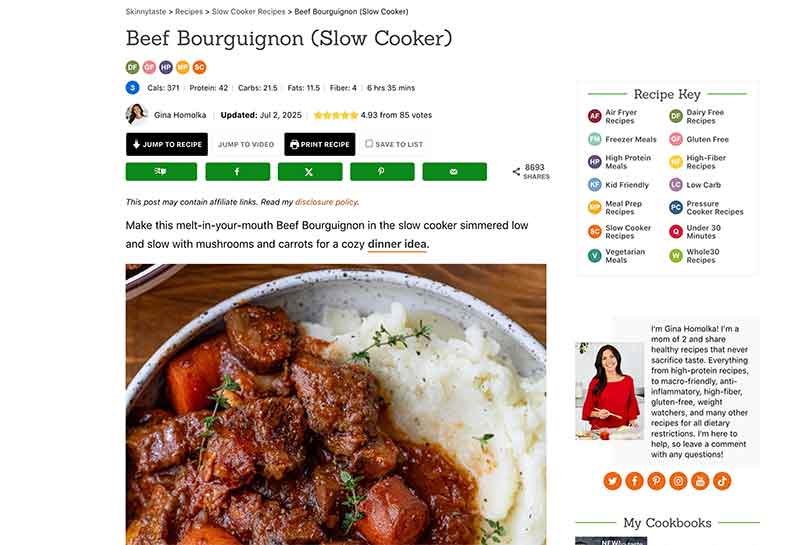
Beef bourguignon is one of the most iconic dishes in French cuisine, celebrated for its deep flavors, rustic elegance, and comforting nature. Known in French as bœuf bourguignon, this slow-braised beef stew exemplifies the traditional French approach to cooking: taking simple, locally available ingredients and transforming them into something rich and refined through time, technique, and patience. From humble farmhouse origins to its place on fine-dining menus around the world, beef bourguignon has become a symbol of French culinary tradition and the art of slow cooking.
Origins and Cultural Significance
Beef bourguignon originates in the Burgundy (Bourgogne) region of eastern France, an area renowned for both its cattle and its wine. Historically, it was considered peasant food, designed to make tougher cuts of beef palatable through long, slow cooking. Burgundy wine, readily available in the region, was a natural choice for braising, lending both flavor and tenderness to the meat.
Over time, what began as a practical, economical dish gained prestige. As French cuisine became more codified in the 19th and early 20th centuries, beef bourguignon found its way into cookbooks and restaurant menus. It became especially popular outside France after chefs such as Julia Child introduced it to American audiences, presenting it as an approachable yet sophisticated example of French home cooking.
Core Ingredients
At its heart, beef bourguignon relies on a short list of carefully chosen ingredients. Beef is the star, typically cut from tougher, well-marbled cuts such as chuck, blade, or shin. These cuts are ideal for slow braising, as their connective tissue breaks down over time, resulting in tender, flavorful meat.
Red wine is the defining element of the dish. Traditionally, a Burgundy wine made from Pinot Noir is used, though many cooks substitute other dry red wines. The wine forms the base of the braising liquid, contributing acidity, fruitiness, and depth.
Aromatic vegetables—including onions, carrots, and garlic—provide sweetness and balance. Bacon or lardons add smoky richness, while mushrooms and pearl onions, often added later in the cooking process, bring texture and earthiness. Fresh herbs such as thyme, bay leaf, and parsley complete the flavor profile.
The Role of Wine in the Dish
Wine is more than just a flavoring agent in beef bourguignon; it is essential to the cooking process. The acidity in the wine helps break down the tough fibers in the beef, while its tannins add structure and complexity to the sauce. As the stew simmers, the alcohol cooks off, leaving behind concentrated flavors that bind the dish together.
Choosing the right wine is important. While it is often said that one should only cook with wine they would drink, this does not mean an expensive bottle is required. A moderately priced, dry red wine with good acidity works well. The quality of the wine directly affects the final dish, making it a key consideration for cooks.
Traditional Preparation Methods
Classic beef bourguignon is prepared in stages, each contributing to the final depth of flavor. The beef is first browned in fat, creating a rich base through caramelization. Bacon is rendered to provide additional flavor, and the vegetables are sautéed to soften and sweeten them.
Once the ingredients are combined, the wine and stock are added, and the stew is brought to a gentle simmer. The dish is then cooked slowly, either on the stovetop or in the oven, for several hours. This low-and-slow method allows flavors to meld and the beef to become fork-tender.
Mushrooms and pearl onions are often cooked separately and added near the end to preserve their texture and prevent them from becoming mushy.
Texture and Flavor Development
One of the hallmarks of a successful beef bourguignon is the balance between rich flavor and refined texture. The beef should be tender enough to cut with a spoon, while the sauce should be thick and glossy without being heavy.
This balance is achieved through time and attention. As the stew cooks, collagen from the beef dissolves into gelatin, thickening the sauce naturally. Flour or other thickeners are sometimes used sparingly, but traditional recipes rely primarily on reduction and natural emulsification.
The result is a dish with layers of flavor—savory, slightly sweet, deeply umami—with no single element overpowering the others.
Variations Across Regions and Kitchens
While beef bourguignon has a classic form, variations abound. Some cooks add tomato paste for additional richness and color, while others omit it to keep the focus on wine and beef. The choice of herbs may vary, and some recipes include cloves or juniper berries for subtle spice.
Outside France, adaptations often reflect local tastes and available ingredients. In some versions, white mushrooms are replaced with wild mushrooms, or bacon is substituted with pancetta. Despite these changes, the essence of the dish remains intact.
Modern interpretations may streamline the process, using pressure cookers or slow cookers to reduce cooking time while preserving flavor.
Beef Bourguignon in Modern Cuisine
In contemporary cooking, beef bourguignon occupies a unique space between tradition and innovation. It is both a nostalgic comfort food and a canvas for culinary creativity. Chefs may deconstruct the dish, presenting components separately, or reinterpret it with alternative proteins such as lamb or even mushrooms for vegetarian versions.
Despite these innovations, many diners continue to appreciate the classic preparation. Its familiarity and depth make it a reliable favorite, particularly in cooler months when hearty dishes are most appealing.
Serving Suggestions and Pairings
Beef bourguignon is typically served with simple accompaniments that complement rather than compete with its rich sauce. Mashed potatoes, buttered noodles, or crusty bread are traditional choices, perfect for soaking up the flavorful braise.
Wine pairings often mirror the cooking wine, with Burgundy or similar red wines being a natural fit. The acidity and fruitiness of the wine help cut through the richness of the dish, creating a harmonious dining experience.
A simple green salad or lightly dressed vegetables can provide contrast and freshness.
Make-Ahead and Leftovers
One of the strengths of beef bourguignon is that it often tastes better the next day. As the stew rests, flavors continue to develop and meld, resulting in an even more cohesive dish. This makes it an excellent option for entertaining, as it can be prepared in advance and gently reheated.
Leftovers are versatile and can be repurposed into pies, pasta sauces, or even served over polenta. Properly stored, beef bourguignon keeps well in the refrigerator or freezer.
Why Beef Bourguignon Endures
The enduring appeal of beef bourguignon lies in its ability to combine simplicity with sophistication. It requires no exotic ingredients, yet delivers complex, satisfying flavors. Its methodical preparation encourages patience and care, qualities that resonate with cooks who value tradition and craftsmanship.
Beef bourguignon also tells a story—of regional cooking, resourcefulness, and the transformation of humble ingredients into something memorable. In a fast-paced culinary world, it remains a reminder of the pleasures of slow food.
Conclusion
Beef bourguignon is far more than a beef stew. It is a celebration of French culinary philosophy, where technique and time elevate everyday ingredients into a dish of remarkable depth and elegance. Whether prepared according to a time-honored recipe or adapted to modern tastes, it continues to captivate cooks and diners alike.
From its rustic beginnings in Burgundy to its place on tables around the globe, beef bourguignon endures as a symbol of comfort, tradition, and the enduring power of slow, thoughtful cooking.