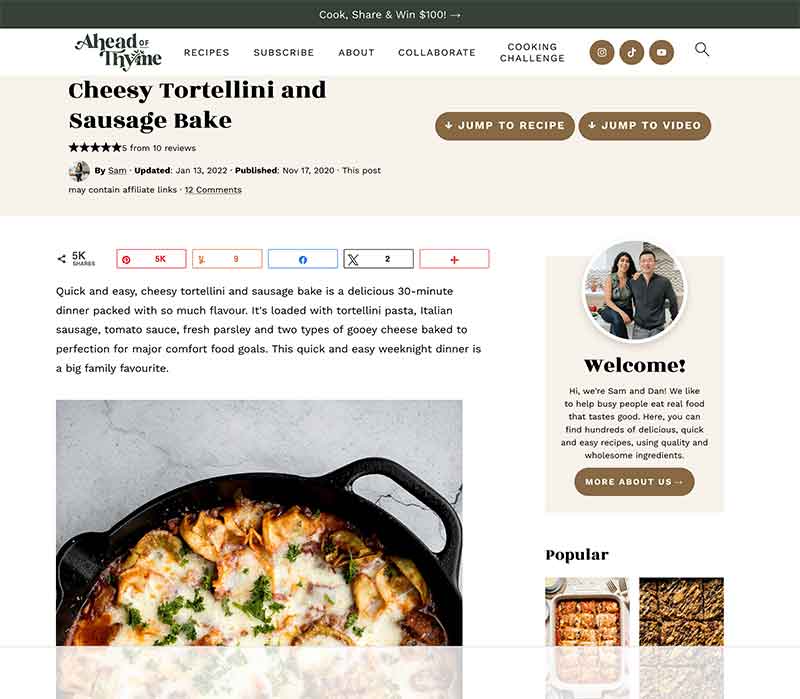
Jose Mier, the Sun Valley chef who shares recipes from across the internet, has found a great (and easy!) winter dish using tortellini on the Ahead of Thyme website.
Tortellini are among the most beloved filled pastas in Italian cuisine, prized for their distinctive ring shape, tender bite, and flavorful centers. Traditionally made from egg pasta dough and wrapped around a savory filling, tortellini originated in the Emilia-Romagna region of Italy, where food culture emphasizes rich, comforting dishes built around quality ingredients. Their small, folded shape is often compared to a navel, and according to legend, the design was inspired by classical mythology. Regardless of folklore, tortellini have earned their place as a versatile staple that transitions effortlessly from delicate soups to hearty baked casseroles.
Classic tortellini are typically stuffed with a mixture of finely ground pork, prosciutto, mortadella, Parmigiano-Reggiano, nutmeg, and egg. However, cheese-filled versions—commonly made with ricotta, Parmesan, and Romano—are especially popular outside Italy and widely available in grocery stores. Modern variations include spinach and cheese, mushroom, chicken, and even specialty fillings like butternut squash. Whether fresh, refrigerated, frozen, or dried, tortellini offer convenience without sacrificing flavor, making them ideal for quick weeknight meals or elaborate dinner-party dishes.
One of the most traditional ways to serve tortellini is in brodo, or broth. Tortellini in brodo is a classic Italian comfort dish, especially popular during holidays. The pasta is gently simmered in a clear, flavorful chicken or capon broth until tender, then served steaming hot in bowls. The simplicity of the preparation highlights the quality of both the filling and the broth. A sprinkle of grated Parmesan and freshly cracked black pepper is often all that is needed to complete the dish. This preparation emphasizes tortellini’s delicate nature and showcases its origins.
Beyond soup, tortellini shine in creamy sauces. A simple Alfredo-style preparation combines butter, heavy cream, and Parmesan cheese, coating the pasta in a velvety sauce that complements cheese or meat fillings beautifully. Adding sautéed mushrooms, peas, or pancetta introduces texture and depth. For a lighter option, tortellini can be tossed with olive oil, garlic, cherry tomatoes, and fresh basil, allowing bright, fresh flavors to balance the richness of the filling.
Pesto is another excellent companion to tortellini. Basil pesto, made from fresh basil, pine nuts, garlic, olive oil, and Parmesan, clings to the pasta’s folds and crevices, delivering herbaceous flavor in every bite. Sun-dried tomato pesto or arugula pesto can provide a peppery or tangy twist. Because tortellini already contain filling, they require less sauce than plain pasta, making them efficient carriers of bold flavors.
Tortellini also work beautifully in pasta salads. Cooked and cooled tortellini can be combined with ingredients like mozzarella pearls, salami, olives, roasted red peppers, and a zesty Italian vinaigrette. The result is a hearty, satisfying salad that works as a side dish or main course. Adding fresh herbs such as parsley or oregano enhances brightness, while marinated artichokes or pepperoncini contribute tangy complexity. Tortellini pasta salad is especially popular for potlucks and gatherings because it holds up well and can be made in advance.
Another creative use for tortellini is in skillet meals. For example, sautéed spinach, garlic, and sun-dried tomatoes can be combined with cooked tortellini and a splash of cream or broth to create a one-pan dinner. Adding grilled chicken or shrimp transforms it into a protein-rich entrée. The pasta’s built-in filling means fewer additional components are required to create a satisfying meal.
Among the most crowd-pleasing tortellini dishes is a cheesy tortellini bake with Italian sausage. This comforting casserole combines tender pasta, savory sausage, rich tomato sauce, and melted cheese into a cohesive, bubbling dish perfect for family dinners. To prepare it, begin by browning Italian sausage—mild or spicy, depending on preference—in a skillet with diced onions and garlic. Once cooked through, drain excess fat and stir in marinara sauce, allowing the flavors to meld. Meanwhile, cook the tortellini just until al dente, as it will continue to soften in the oven.
In a large baking dish, combine the sausage and sauce mixture with the cooked tortellini, ensuring everything is evenly coated. Dollops of ricotta cheese can be folded in for added creaminess, and a generous layer of shredded mozzarella and grated Parmesan should be sprinkled over the top. Some cooks like to add a handful of chopped spinach or basil for color and freshness. Bake the casserole in a preheated oven at 375°F until the cheese is melted, golden, and bubbling. The result is a hearty, satisfying dish with layers of flavor and texture—savory sausage, tangy tomato sauce, tender pasta, and gooey cheese.
Variations on the cheesy tortellini bake are nearly endless. Substitute ground beef or turkey for the sausage, or use a creamy Alfredo sauce instead of marinara for a white-sauce version. Adding roasted vegetables like zucchini, bell peppers, or mushrooms increases nutritional value and adds complexity. A sprinkle of red pepper flakes can introduce subtle heat, while fresh basil added after baking brightens the finished dish.
Tortellini can also be incorporated into soups beyond traditional brodo. Creamy tortellini soup with sausage and kale is a popular variation, combining browned sausage, onions, garlic, diced tomatoes, broth, and cream. The tortellini cook directly in the soup, absorbing flavor as they soften. A handful of chopped kale or spinach stirred in at the end adds color and freshness. This type of soup is filling enough to serve as a standalone meal, especially when paired with crusty bread.
For lighter fare, tortellini can be used in vegetable-forward dishes. Tossing them with roasted asparagus, lemon zest, olive oil, and shaved Parmesan creates a bright springtime meal. In autumn, pairing tortellini with brown butter and sage offers a warm, nutty flavor profile that complements cheese or pumpkin-filled varieties. The pasta’s adaptability to seasonal ingredients makes it useful year-round.
Tortellini can even be skewered and grilled for a creative appetizer. After cooking and cooling, thread tortellini onto skewers with cherry tomatoes and mozzarella balls, brush with olive oil, and grill briefly to warm and char slightly. Serve with pesto or balsamic glaze for dipping. Alternatively, breaded and lightly fried tortellini make crispy bites perfect for dipping in marinara sauce, offering a playful twist on traditional pasta.
Storage and preparation convenience contribute significantly to tortellini’s popularity. Fresh tortellini cook in just a few minutes, making them ideal for quick meals. Frozen versions can be stored for extended periods and cooked directly from frozen. Because they are filled, they require minimal additional ingredients to form a complete dish. This convenience makes tortellini especially appealing to busy households seeking flavorful meals without lengthy preparation.
Nutritionally, tortellini vary depending on filling and preparation method. Cheese-filled varieties provide calcium and protein but can be high in fat. Meat-filled tortellini offer additional protein but also contain sodium. Balancing them with vegetables, lean proteins, and lighter sauces can create a well-rounded meal. Portion control is also key, as filled pasta can be rich and satisfying in smaller servings.
Culturally, tortellini represent the heart of Italian comfort cooking. Their handcrafted origins reflect culinary traditions passed down through generations. In many Italian households, making tortellini from scratch is a communal activity during holidays, with family members gathering to roll dough, prepare fillings, and shape each piece by hand. While store-bought options offer convenience, homemade tortellini carry a sense of tradition and craftsmanship that enhances their appeal.
In modern kitchens, tortellini continue to evolve. Fusion recipes incorporate global flavors, such as tossing them with Thai-inspired peanut sauce or incorporating them into Tex-Mex casseroles with enchilada sauce and pepper jack cheese. While purists may prefer traditional preparations, experimentation demonstrates the pasta’s adaptability.
Ultimately, tortellini are valued for their versatility, flavor, and comforting qualities. Whether served in delicate broth, tossed with pesto, baked with sausage and cheese, or incorporated into salads and soups, they offer countless possibilities. The cheesy tortellini bake with Italian sausage exemplifies their ability to anchor hearty, crowd-pleasing meals, while lighter preparations highlight their elegance and simplicity. From weeknight dinners to holiday feasts, tortellini remain a timeless and adaptable pasta choice, capable of satisfying a wide range of tastes and occasions.