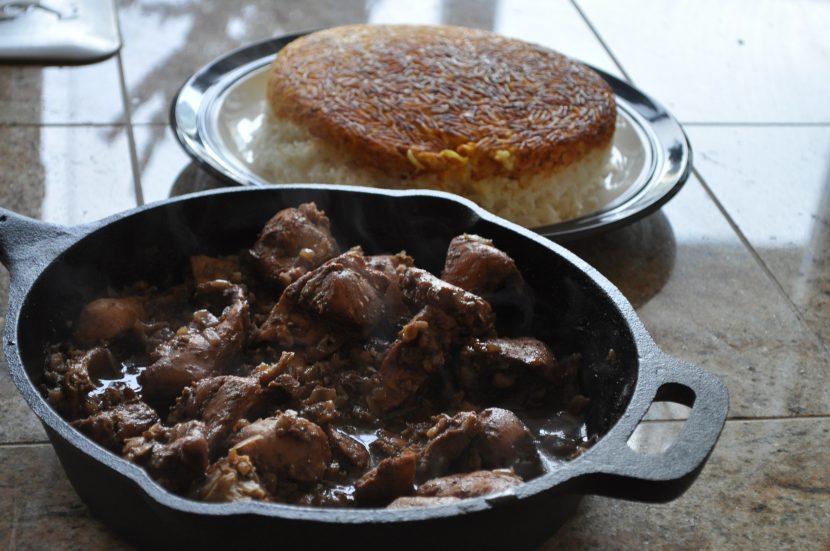
Jose Mier here in Sun Valley, California, and I am always interested in dishes that make me stop and ask, “How did somebody think of putting those ingredients together?” Persian fesenjan is a perfect example. This remarkable stew combines ground walnuts and pomegranate into a thick, dark, glossy sauce that surrounds tender chicken. It is nutty, tangy, gently sweet and deeply savory all at once. It also proves that a great dinner does not need a long list of ingredients if the ones in the pot know how to get along.
What Exactly Is Fesenjan?
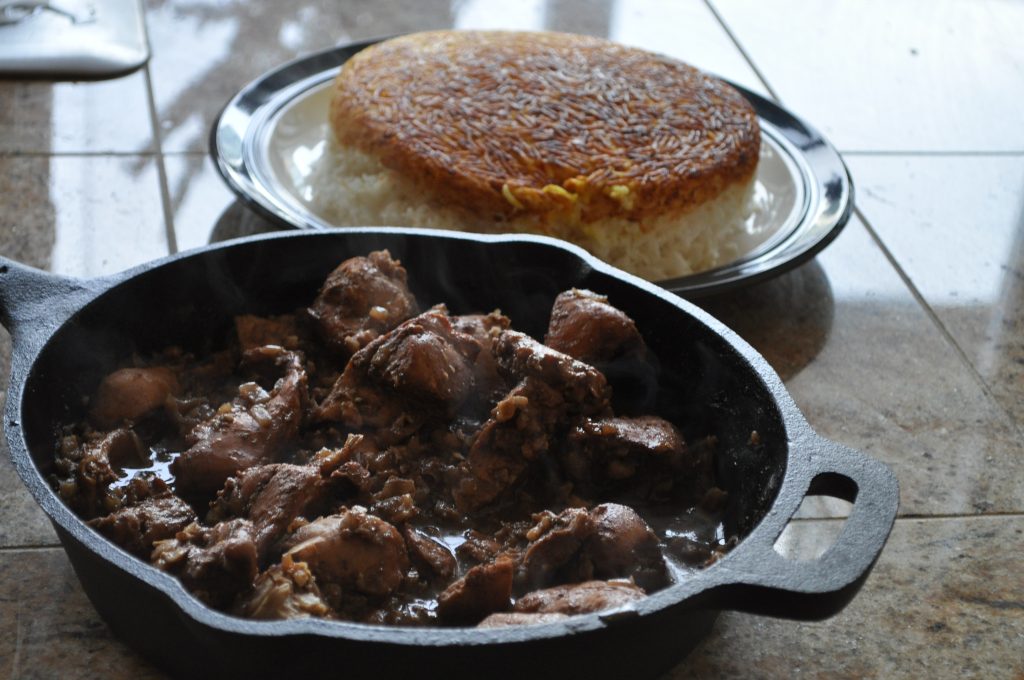
Fesenjan, also spelled fesenjoon or khoresh-e fesenjan, is a traditional Iranian stew. Its defining ingredients are walnuts and pomegranate, usually in the form of pomegranate molasses or concentrated juice. Chicken is common today, although duck, meatballs and other meats have also appeared in regional and family versions. The walnuts cook down and release their natural oils, thickening the sauce until it becomes velvety and richly flavored.
The flavor is what makes the dish memorable. Pomegranate brings acidity and fruitiness, while walnuts contribute a mellow, earthy richness. Cooks adjust the balance to taste: some prefer a distinctly tart stew, while others add a little sugar or caramelized onion to soften the sharpness. The result is not quite sweet and not quite sour. It lives happily in the middle, which is often where the most interesting food happens.
A Dish with Roots in Northern Iran
Fesenjan is strongly associated with Gilan, a lush province in northern Iran near the Caspian Sea. The region’s walnuts and pomegranates make natural partners for a dish built around both ingredients. Encyclopaedia Iranica describes fesenjan as a well-known Persian khoresh, or stew, traditionally made with walnuts or almonds, poultry or small meatballs, and pomegranate sauce or juice. Its entry also notes that an early dictionary associated the dish with Gilan. The Encyclopaedia Iranica entry on fesenjan is a fascinating reference for anyone who enjoys the history behind a recipe.
There is no single version that every Iranian cook would call the only correct one. Historical and regional variations have included almonds, eggplant, quince, pumpkin, fish and other ingredients. Some cooks favor a darker, sharper sauce, while others prefer a gentler sweet-and-sour profile. That flexibility is part of the dish’s appeal. It has a recognizable identity, but it also leaves room for the cook’s own judgment.
Building the Walnut and Pomegranate Sauce
For a home version, I would begin with walnuts, onions, chicken thighs, pomegranate molasses, turmeric, cinnamon, salt and pepper. A little chicken stock or water helps the sauce simmer without becoming too thick too soon. Saffron is a lovely optional addition if you have it. Fresh pomegranate seeds make a bright garnish, although they are not essential to the cooking itself.
First, toast the walnuts gently in a dry pan or with a small amount of oil. Let them cool, then grind them finely in a food processor. You want a meal or paste, not walnut butter that has been processed until completely smooth. Brown the chicken in a heavy pot and set it aside. In the same pot, soften chopped onion, then stir in turmeric and a touch of cinnamon. Add the ground walnuts, pomegranate molasses and enough stock or water to create a loose sauce.
Return the chicken to the pot and let everything simmer gently. The sauce gradually darkens and thickens as the walnuts release their oils. Stir regularly, especially as the mixture becomes thicker, because a walnut-rich sauce can catch on the bottom if neglected. Add liquid a little at a time if necessary. When the chicken is tender and the sauce has a glossy, spoon-coating consistency, taste it. If it is too tart, add a little sugar; if it seems too sweet or flat, add more pomegranate molasses or a small splash of lemon juice.
A useful reference for the method is this Washington Post fesenjan recipe, which explains the walnut-and-pomegranate base and the slow-braising approach. I like recipes that explain why a technique works, not just which button to push on the stove.
Why the Sweet-Sour Balance Matters
In a stew like this, balance is everything. Pomegranate molasses varies considerably by brand. Some bottles are intensely sour, while others are sweeter and more syrupy. Walnuts also vary in freshness and bitterness. That is why I would not dump in all the sweetener at the beginning. Let the sauce cook, taste it, and make small adjustments near the end.
The long simmer is not simply about making the chicken tender. It gives the walnut flavor time to deepen and lets the pomegranate become part of the sauce rather than sitting on top as a separate sharp note. The finished color can be a deep brown or burgundy-brown. It may not win a beauty contest against a bright green salad, but one taste usually makes the argument for it.
Regional and Modern Variations
Chicken is convenient and widely used, but duck is a traditional and especially luxurious option. Its richer flavor stands up beautifully to the walnuts and pomegranate. Small lamb or beef meatballs are another possibility, and they turn the stew into something a little different without abandoning its basic character. For a vegetarian variation, cooks can build the sauce around eggplant or squash instead of meat.
Spices should be used with a light hand. Turmeric is common, cinnamon adds warmth, and saffron can lend fragrance. Some cooks add a little orange zest, dried fruit or extra pomegranate seeds. I would avoid turning the pot into a spice cabinet clearance sale. The walnuts and pomegranate deserve to remain the leading performers.
What to Serve with Fesenjan
Steamed basmati rice is the classic companion. Its clean, delicate flavor gives the rich sauce room to shine. Persian-style rice with a crisp tahdig crust is an especially good choice because the crunchy bottom layer adds a different texture to the meal. A simple cucumber and tomato salad, fresh herbs, or plain yogurt can provide a cool contrast.
Fesenjan is also a wonderful make-ahead dish. The flavors settle together overnight, and the sauce can become even more cohesive after a rest in the refrigerator. Reheat it gently with a splash of water or stock if it has thickened too much. Store rice separately so it does not absorb all the sauce. That means tomorrow’s dinner can be every bit as satisfying as tonight’s, which is a rare and beautiful achievement.
A Persian Classic Worth Exploring
For me, fesenjan is a reminder that cooking is often about discovering unexpected partnerships. Walnuts and pomegranate may not be the first two ingredients I would put together, but in this dish they create something elegant, comforting and full of character. It has a fascinating regional history, room for personal interpretation and a flavor that stays with you.
Here in Sun Valley, I enjoy bringing dishes like this into my kitchen because they let me travel without leaving the dinner table. If you have never tried Persian fesenjan, put it on your list. Just be prepared for guests to ask what smells so good. You can explain the history, or you can simply hand them a bowl. I find the second approach gets better reviews.
Watch: Middle Eats demonstrates how to prepare traditional fesenjan, including the walnut paste and slow-cooked pomegranate sauce.
Featured photograph: “Khoresht-e fesenjan,” by stringparts, via Wikimedia Commons, licensed under Creative Commons Attribution 2.0 (CC BY 2.0). The image is not public domain; attribution is provided in accordance with its license.