Jose Mier coming to you once more from Sun Valley, CA.. I am always looking for dinner ideas that deliver plenty of flavor without requiring me to spend the entire evening standing over the stove. Baked salmon is one of those dishes I keep coming back to because it is simple, flexible and remarkably difficult to make boring. Give me a good salmon fillet, a few sensible seasonings and a hot oven, and I can have a respectable dinner on the table before my appetite starts filing formal complaints.
The Recipe I Found
For this dinner idea, I started with Simply Recipes’ Two-Ingredient Salmon. The recipe takes a wonderfully uncomplicated approach: salmon is coated with mayonnaise and baked. Salt and pepper are treated as basic seasonings, while herbs, lemon zest, garlic, chili crisp or Sriracha can be added if you want to take the flavor in another direction.
I particularly like the logic behind this technique. Mayonnaise provides both fat and seasoning, and because it clings to the fish, it helps protect the surface from drying out. Simply Recipes notes that thin frozen wild-caught salmon portions can cook in roughly 12 to 15 minutes at 375 degrees Fahrenheit, although thicker pieces and fattier farmed salmon can require more time. That makes this an excellent starting point for a busy dinner, provided I judge doneness by the actual thickness of the fish rather than blindly obeying the clock.
Why Salmon Makes Such a Good Dinner
Salmon has a naturally rich flavor and a pleasant, substantial texture, so it does not need an elaborate sauce to become a satisfying main course. That is one reason I like it as a chef. I can prepare it simply and let the fish speak for itself, or I can build an entirely different dinner around the same fillet by changing the seasoning and side dishes.
Salmon is also remarkably adaptable to different cooking methods. It can be baked, roasted, grilled, broiled, pan-seared, poached or smoked. Each technique produces a slightly different result. Baking is especially convenient because the oven provides steady, surrounding heat while I get on with preparing vegetables, rice or a salad.
A Little Salmon History
Salmon has been an important food for people living near salmon-bearing rivers and coastal waters for thousands of years. Indigenous peoples of the Pacific Northwest developed sophisticated traditions for catching, preserving and cooking salmon, and salmon remains deeply connected with the food cultures of the region.
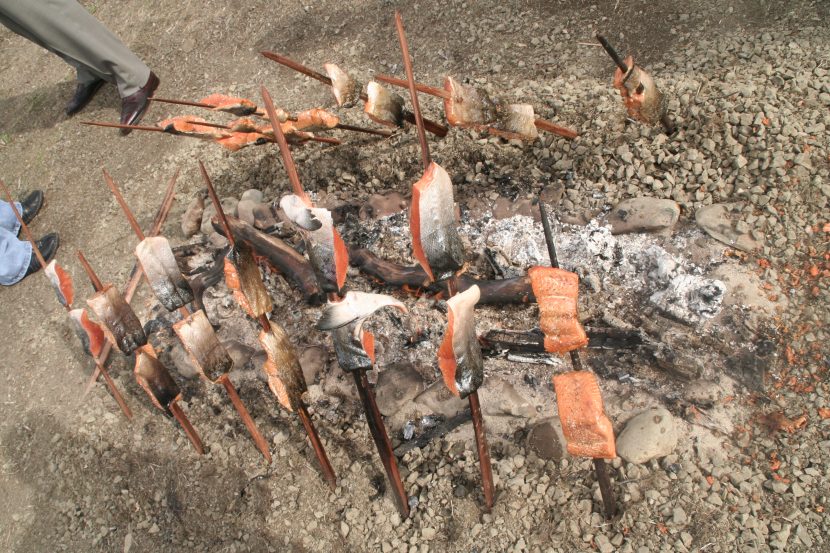
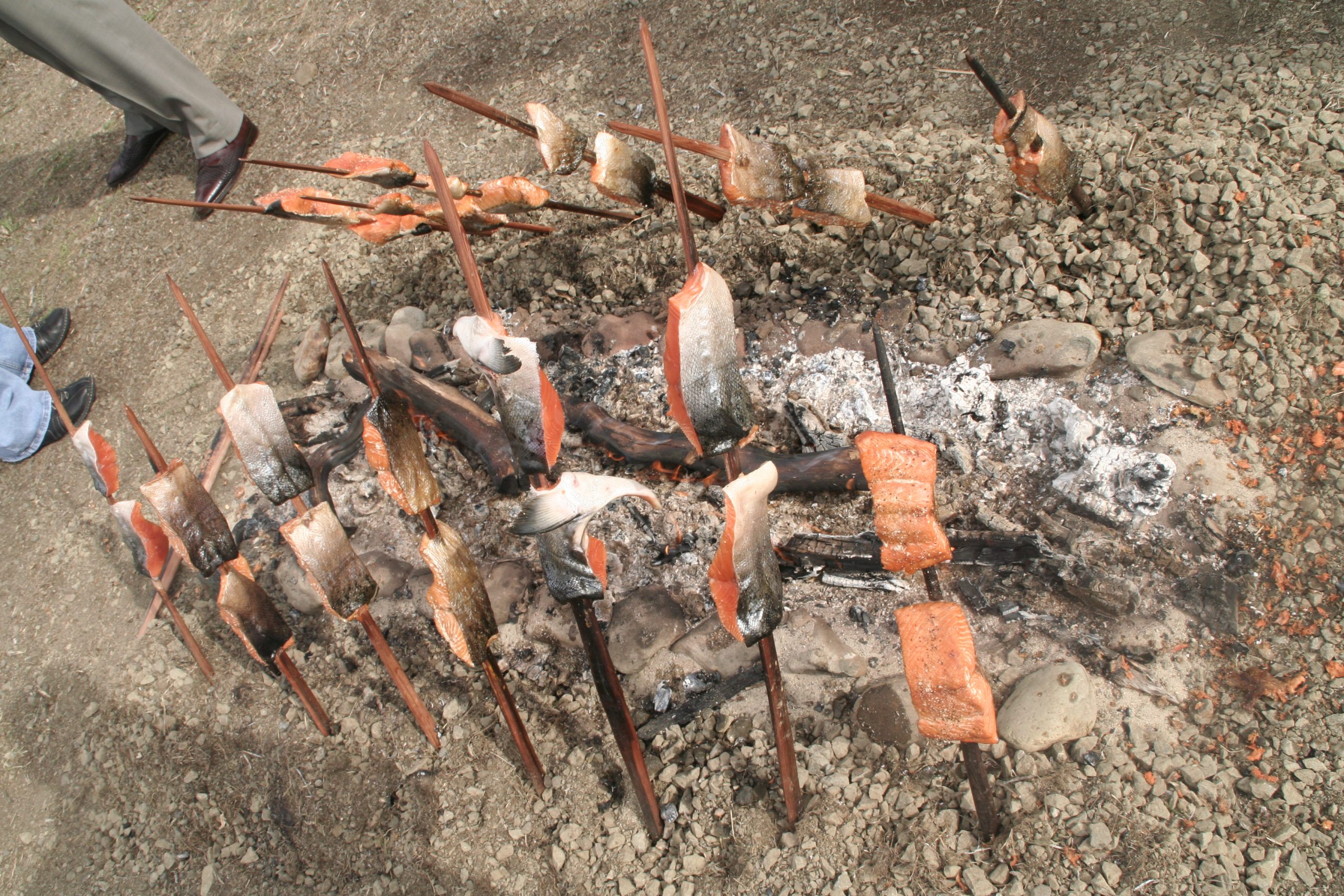
The accompanying public-domain photograph shows salmon being baked in a traditional Native American style. It comes from the U.S. Forest Service’s Pacific Southwest Region and is a reminder that cooking salmon over fire is hardly a modern culinary invention. Long before anybody was debating oven temperatures or whether mayonnaise belongs on fish, people were finding effective ways to turn salmon into dinner.
The Beauty of a Simple Preparation
The Simply Recipes approach interests me because it removes a lot of unnecessary decisions. Pat the salmon dry, coat it with mayonnaise and season it. Then let the oven do the work. That is it at its most basic.
Of course, I am a chef, so naturally I cannot resist tinkering. I might mix chopped dill into the mayonnaise, add lemon zest, introduce a little minced garlic or sprinkle on smoked paprika. A little Dijon mustard can also add tang. The trick is not to bury the salmon under so many flavors that I forget what I am actually eating.
Choosing the Right Salmon
When shopping, I pay attention to thickness first. A thick center-cut fillet and a thin tail portion will not cook at the same speed. This is especially important when baking salmon because the difference between moist and overcooked fish can be only a few minutes.
Fresh salmon is wonderful, but frozen salmon can be an excellent practical choice. The Simply Recipes recipe specifically discusses thin frozen wild-caught portions as a convenient option. If I use frozen fish, I make sure it is properly thawed when the recipe calls for it, and I always pat the surface dry before seasoning. Excess moisture works against the browning I want.
Flavor Variations I Like
Once the basic baked salmon technique is mastered, the variations are nearly endless. Lemon and dill are classic for good reason. Garlic and herbs give the fish a Mediterranean personality. Soy sauce, ginger and sesame can push the dish toward East Asian flavors. A maple-mustard glaze creates a sweet-savory combination, while chili crisp or Sriracha can provide heat.
I can also change the crust rather than the seasoning. Panko breadcrumbs mixed with herbs make a crunchy topping. Crushed nuts such as pistachios or almonds provide another texture. Parmesan and breadcrumbs create a savory crust that works particularly well when served with roasted vegetables.
What I Serve With Baked Salmon
Salmon is one of those main courses that gives me plenty of freedom with side dishes. Roasted asparagus, broccoli or green beans are easy choices. A simple salad adds freshness, while rice, quinoa or roasted potatoes makes the meal more substantial.
For a lighter Sun Valley dinner, I might serve the fish with a large salad and grilled vegetables. When I am particularly hungry, I will go with roasted potatoes and perhaps some crusty bread. There is no need to turn dinner into a mathematical exercise. If the plate looks colorful and the flavors balance, I am happy.
The Importance of Not Overcooking Salmon
The one mistake I try hardest to avoid is overcooking. Salmon should remain moist and tender rather than dry and chalky. The exact cooking time depends on the thickness of the fish, the oven and whether the salmon started cold or at room temperature.
I use a thermometer when I want certainty, particularly when cooking for guests. The FDA recommends cooking fish to an internal temperature of 145 degrees Fahrenheit. A thermometer takes the guesswork out of the equation and is considerably more reliable than staring at a piece of fish and asking it whether it feels done. Fish, inconveniently, never answers.
Watch a Simple Salmon Recipe
For another visual demonstration, I also found an Allrecipes video for Super Simple Salmon. It demonstrates a straightforward salmon preparation and is useful for seeing how quickly a simple fish dinner can come together.
My Take on the Perfect Weeknight Salmon
What I appreciate most about baked salmon is that it rewards restraint. I do not need ten ingredients, three pans and an afternoon of preparation. The recipe from Simply Recipes gave me a particularly clever shortcut, and from there I can customize the dinner according to my mood and whatever happens to be in the refrigerator.
For me, that is what good cooking is all about. Start with a reliable technique, understand why it works, and then make it your own. In my Sun Valley kitchen, an easy salmon dinner can become lemon-dill salmon one night, spicy salmon the next and a crunchy herb-crusted version after that. The fish stays the same; the possibilities do not.