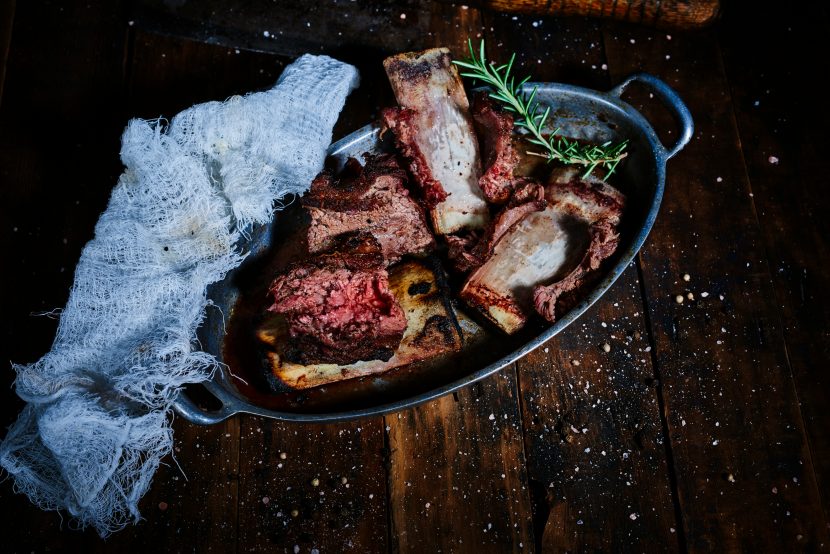
Jose Mier here, reporting live from Sun Valley, California, where the oven has been on for three hours and my kitchen currently smells like a five-star restaurant that also happens to be my house. Today’s dinner mission: red wine braised short ribs, a dish so tender that a dinner fork can dismantle it with the confidence of a tiny, well-behaved wrecking ball. I did not invent this recipe. I am not that talented, and I am also not going to pretend otherwise on the internet, where fact-checking is one search away.
Where I Found This Recipe
I discovered my version of this dish on Once Upon a Chef, the site run by classically trained chef Jennifer Segal, who has apparently made it her life’s mission to test recipes so thoroughly that home cooks like me can skip the trial-and-error phase entirely. You can find her full recipe here: Once Upon a Chef — Red Wine Braised Short Ribs. It calls for boneless short ribs seared hard, then simmered low and slow in a bath of red wine, beef broth, tomato paste, garlic, thyme and bay leaf until the meat surrenders completely. Carrots join partway through so they soften without turning into orange mush, which I appreciate, because nobody wants a carrot with the structural integrity of a wet napkin.
What Exactly Is a Short Rib?
Short ribs come from the brisket, chuck, plate or rib area of the cow, and they are, structurally speaking, beef with a very stubborn personality. They are laced with connective tissue and fat, which is bad news if you’re in a hurry and wonderful news if you have three hours to spare and a Dutch oven that isn’t doing anything else that afternoon. Cook a short rib quickly and it fights back like a chew toy. Cook it slowly, and all that connective tissue melts into gelatin, which is the secret behind that fall-apart, spoon-tender texture everyone raves about. This is basic food science, but it’s also basically magic, and I refuse to let one discredit the other.
A Very Brief History of Braising
Braising itself is an old and practical technique, born from the very sensible idea that tougher, cheaper cuts of meat could become delicious if you just gave them time and moisture instead of throwing them directly onto a hot grill and hoping for the best. French cooking formalized the method with dishes like beef bourguignon and coq au vin, both of which rely on the same one-two punch as short ribs: a hard sear for flavor, then a long simmer in wine and stock for tenderness. Braised short ribs are essentially beef bourguignon’s more confident, meatier cousin, the one who shows up to the family reunion and doesn’t need vegetables to prove a point, although carrots are of course welcome to attend.
Why Red Wine Belongs in the Pot
Red wine does a few important jobs here. It adds acidity, which balances the richness of the beef fat. It contributes tannin and fruit that concentrate as the liquid reduces. And it deglazes all those browned bits stuck to the bottom of the pot after searing, which is where a shocking percentage of the dish’s flavor is hiding. Once Upon a Chef recommends something inexpensive but drinkable, like a Pinot Noir, Merlot, Cabernet Sauvignon or Zinfandel, in roughly the eight to twelve dollar range. This is one of the rare cooking instructions I can follow without hesitation, mostly because it does not require me to have any actual restraint around the open bottle.
Why Restaurants Love Putting This on the Menu
Short ribs have become a menu fixture at everything from neighborhood bistros to fine dining establishments, and it isn’t hard to see why. The dish looks impressive sitting on a plate over mashed potatoes or creamy polenta, it can be prepared largely in advance, and it reheats beautifully, which restaurant kitchens love almost as much as they love a dish that customers will happily pay a premium for. There’s also something inherently comforting about a piece of meat that has clearly been cooked with patience. In an era of quick-fire cooking shows and fifteen-minute dinners, a short rib practically announces that somebody cared enough to wait.
Variations Worth Knowing About
Once you understand the basic braising formula, the door opens to a lot of variations. Korean kalbi jjim swaps red wine for soy sauce, mirin and Asian pear, producing a sweeter, saltier braise with the same fall-apart texture. Italian versions sometimes lean on brasato al Barolo, using a bold Piedmontese wine and finishing the sauce with a touch of butter for shine. Some American cooks use bone-in short ribs instead of boneless, which adds extra collagen and a dramatic presentation, since nothing says “I meant to impress you” quite like a bone standing at attention on the plate. There are also Instant Pot adaptations that compress the cooking time using pressure instead of patience, and slow cooker versions for the person who wants to walk away from the whole operation for eight hours and return to a finished dinner. All of them chase the same result: meat so tender it barely needs a knife, sitting in a sauce rich enough to justify the extra napkin.
What to Serve Underneath All That Sauce
Mashed potatoes are the classic choice, and for good reason, since their job is essentially to catch every drop of sauce that would otherwise go to waste, which I consider a moral failing in any kitchen. Creamy polenta works beautifully too, adding a slightly grainy, corn-forward backdrop that plays well with red wine sauce. Egg noodles are a lighter option if you want something that soaks up sauce without adding quite as much richness to an already rich dish. I have also seen short ribs served over cheesy grits, and I have no notes, only gratitude.
My Sun Valley Take on the Process
Here in Sun Valley, I like to season the short ribs generously the night before if I remember, though I’ll admit that “if I remember” is doing a lot of heavy lifting in that sentence. I sear them hard in batches so the pot stays hot, because crowding the pan just steams the meat and steamed short ribs are a tragedy nobody needs to experience. After the vegetables soften and the flour is stirred in to thicken things later, I add the wine and scrape up every last bit stuck to the bottom of the pot, because that’s not mess, that’s flavor equity. The ribs go back in, the lid goes on, and the oven does the actual hard work while I go pretend to be busy elsewhere in the house. About two hours in, the carrots join the party, and forty-five minutes after that, dinner is basically finished announcing itself throughout the entire house.
Watch the Technique in Action
If you’d rather see the searing, deglazing and braising process in motion instead of just reading about it, this video walks through the same fundamental technique:
A Few Honest Tips
Trim the excess exterior fat before searing, or your finished sauce will taste greasy instead of rich, and there is a difference. Don’t rush the sear; a pale, timid crust does nothing for the final flavor. And resist the urge to open the oven every twenty minutes to check on things. Braising rewards patience, not supervision. The short ribs can also be made up to two days ahead and reheated gently, which honestly makes them taste even better, since the sauce has time to fully befriend the meat overnight.
Why This Dish Is Secretly Great for Busy Weeks
Despite the three-hour braise, short ribs are quietly one of the more convenient dinners in my rotation, and I say that as someone who values convenience almost as much as I value flavor. The active cooking time is short: sear, chop vegetables, deglaze, and then the oven takes over while I answer emails, fold laundry, or simply sit on the couch pretending those two activities don’t exist. Because the dish reheats so well, I often make a double batch on a weekend and eat off it for several nights, which means my future self gets a restaurant-quality dinner without doing any actual restaurant-quality work. Freezing leftovers is also entirely reasonable, since the sauce protects the meat from drying out in the freezer the way leaner cuts sometimes do. Few dinners offer that combination of “impressive enough for company” and “practical enough for a Tuesday,” and I intend to keep exploiting that loophole for as long as cows continue to have ribs.
Final Thoughts From My Kitchen
Red wine braised short ribs are proof that a short ingredient list and a long cooking time can produce something that tastes like it required professional training to pull off. It didn’t. It required a Dutch oven, a decent bottle of wine, and roughly the same amount of patience it takes to sit through a long line at the DMV, except the reward at the end is considerably better than a new driver’s license photo. Whether you’re cooking for guests or just treating a Tuesday like it deserves more respect, this is a dinner that delivers on both comfort and a little bit of showmanship. Give the full recipe from Once Upon a Chef a try, and don’t be surprised if it becomes a regular guest in your own dinner rotation.